
Nantucket Sign News ·
Where Houses Have Names: A Brief History of Quarterboards on Nantucket
By Andrea Gollin
Sanktuary. Low Tide. Ack Shack. East Meets West. Never Say Never. Caught in the Ack. Far and Away. Summer Wind. Cloud Nine. These are just a few of the house signs that Nantucket Quarterboard Company has made or refurbished in recent years.
Nantucket is a place where houses have names. And these names are typically carved into long, narrow pieces of hardwood that are carefully painted, often with gold leaf for the lettering. They are then displayed on the home’s exterior, usually above the front door. These signs are called quarterboards, and they have deep ties to the island’s maritime history as well as its long tradition of craftsmanship.
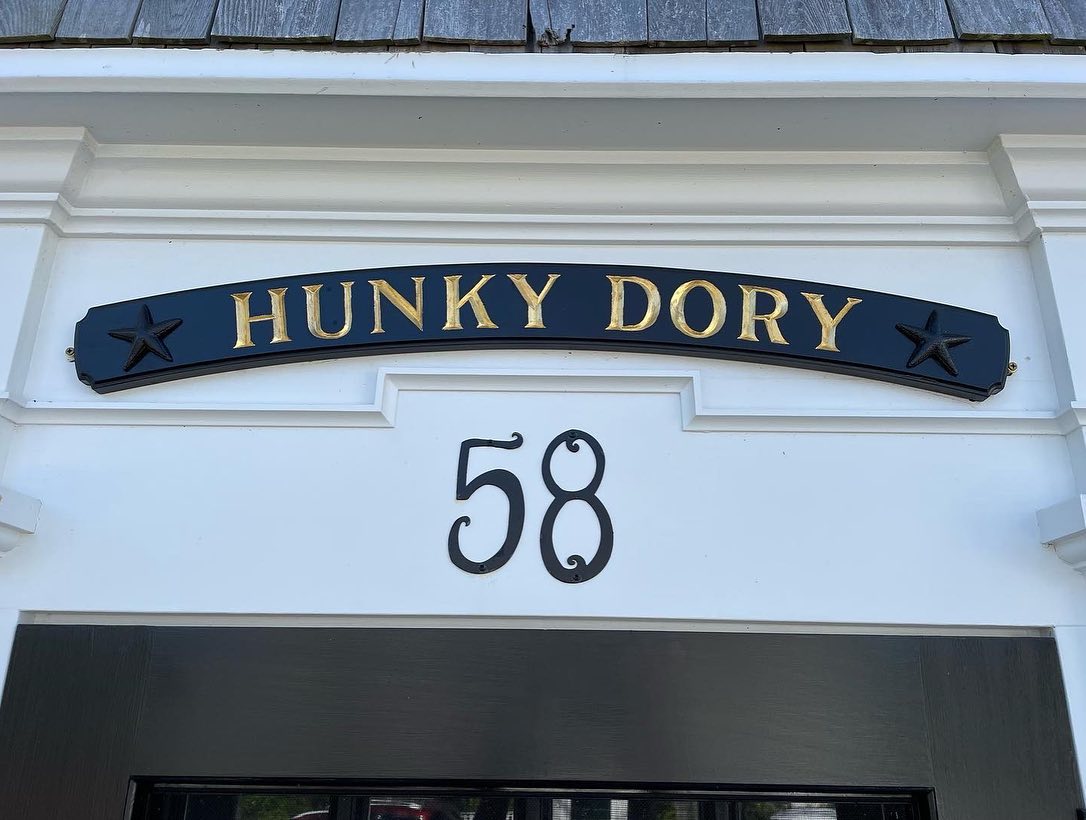
What many people don’t realize is that having one’s house name carved on a quarterboard is actually a fairly recent development. And while it is now common in New England’s coastal areas as well as in other locations, the house-name quarterboard originated on Nantucket, according to Sharon L. Hubbard, author of Quarterboards: A Unique Art Form.
Today’s house-name quarterboards can be traced to the co-mingling of two island traditions. One is that of quarterboards on ships, and the other is the practice in Sconset of naming buildings. Starting in the 1400s, ships often had their names carved and mounted to the exterior. But it was not until 1815 that maritime laws required that ship names be affixed to the vessel’s stern to distinguish legitimate ships from pirate ships. Often the quarterdeck displayed a second, smaller sign with the ship’s name; these were called quarterboards.
There were many shipwrecks in the waters off Nantucket between the 1850s to 1930s. It was common to salvage the signs with the ships’ names from the wrecked ships, which were then displayed in houses and barns; this was the beginning of quarterboards on homes.
The second island tradition began in Sconset and dates to the 1600s—there, many buildings were named and labeled with painted signs. This practice was brought to Nantucket by the English colonists who arrived in the mid-1600s and established a whaling and fishing station in Sconset, building basic shacks for shelter.
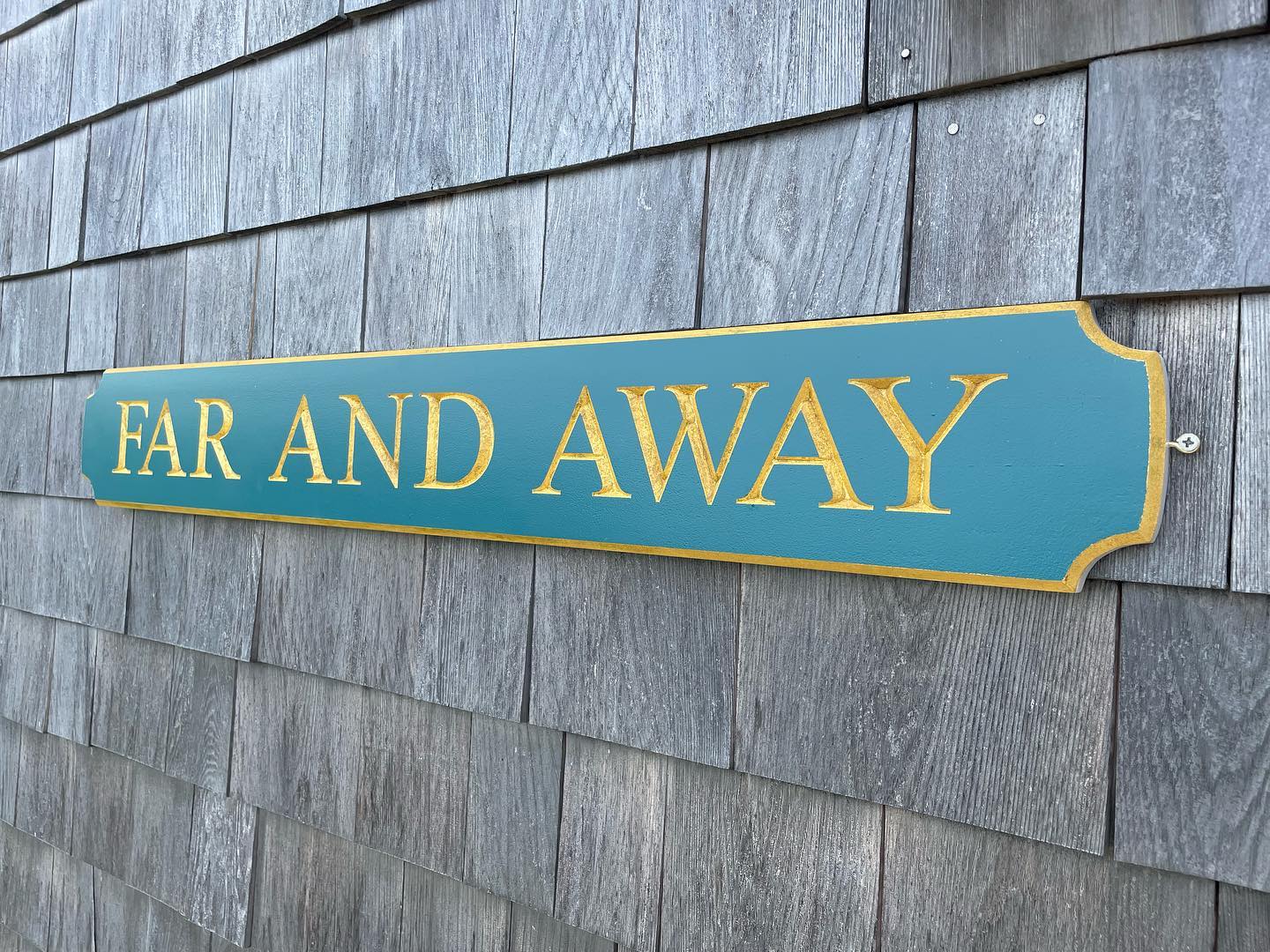
These two traditions mingled sometime in the 1800s and gradually developed into today’s practice of naming houses and carving the names on maritime-style quarterboards. But it was not until the 1970s or so that the house-name quarterboard became widespread on Nantucket. The quarterboards’ popularity has only grown since then, and today they are a prized element of the island’s built environment.
Frequently Asked Questions
What is a quarterboard sign?
A quarterboard is a long, narrow hardwood sign carved with a name and finished in paint or gold leaf. Ships once carried them on the quarterdeck to show the vessel's name; on Nantucket today they hang on homes, usually above the front door, showing the house's name.
Why are they called quarterboards?
The name comes from where they hung on a ship: on the aft quarter, near the stern and the quarterdeck, as a second, smaller board showing the ship's name.
When did Nantucket houses start displaying quarterboards?
Islanders began hanging salvaged quarterboards from wrecked ships in houses and barns during the era of frequent shipwrecks, roughly the 1850s to the 1930s. Carving a house's own name on a quarterboard grew out of that habit and the older Sconset custom of naming buildings, and it became widespread on Nantucket around the 1970s.
Did house-name quarterboards start on Nantucket?
According to Sharon L. Hubbard, author of Quarterboards: A Unique Art Form, the house-name quarterboard originated on Nantucket before spreading to coastal New England and beyond.